





Masters of their Craft: the art, architecture and garden design of the Nesfields
Masters of their Craft: the art, architecture and garden design of the Nesfields, Shirley Rose Evans, Lutterworth Press 2014, 228 pages, 55 black and white and 51 colour illustrations.
Think of a Victorian garden and the image that comes to mind is probably a scheme by William Andrews Nesfield. The work of Nesfield and his son William Eden Nesfield was so prolific that their contribution to architectural and garden design in many ways exemplifies the age.
Inspired by the beauty and romance of history, they played an important role in the 19th-century revival of the Jacobean, renaissance and gothic styles. They were commissioned by wealthy patrons across the country and received prestigious public commissions in London; both were also highly accomplished watercolourists and draftsmen. WA Nesfield’s parterre-debroderie, an intricate pattern of highly artificial bedding on a flat plane, became his signature design and the centrepiece of many commissions. But it was the very complexity, level of control and materials used in these designs that eventually led to the style falling from favour.
Shirley Evans, who has spent years researching and publishing articles about the Nesfields, is well placed to produce a study focusing on their lives and work. Privileged access to the family archives, beautiful photographs from Country Life, contemporary publications and original sources have yielded a wealth of information about their lives, interests and designs, so much there seems to be material for a volume dedicated to each man. The flow of the narrative is interrupted by short biographies and context concerning other artists and designers with whom the Nesfields associated, suggesting that the book is aimed at a wide audience, not just architectural and garden historians.
This study provides a wonderful portrait of these Victorian gentlemen, products of their age. It includes many fascinating details, including informative captions from a shrubbery plan, extracts from letters to clients providing insights into design intentions, and quotations from contemporary descriptions of parterre planting.
This level of detail simply invites more questions and analysis. What exactly made William Andrews resign his military commission to become a painter? Which commissions most clearly demonstrate the influence of their painting on landscape design, and how did one commission lead to another? A fuller assessment of the Nesfields’ legacy and influence would have made a useful contribution to the conclusion.
The book includes valuable lists of commissions and of the exhibited watercolours of WA Nesfield. It is referenced and generously illustrated throughout, with their drawings and watercolours demonstrating the Nesfields’ considerable skill. It would have been useful to have dates and sources of all photographs to aid understanding and clarity about what remains or has been restored.
This book is a welcome addition to studies of prominent landscape designers. It will inform greater understanding of the Nesfields’ work and contribution to architectural and garden design, and encourage readers to search out their surviving creations.
This article originally appeared as ‘Nineteenth-century revivals’ in the Institute of Historic Building Conservation’s (IHBC’s) Context 139, published in June 2015. It was written by Barbara Moth, retired historic landscape Consultant.
--Institute of Historic Building Conservation
Related articles on Designing Buildings
IHBC NewsBlog
IHBC sponsors Gardens Trust event 23-4 Sept 2026
.jpeg)
'Learning from the Past, Shaping the Future’ takes place in Milton Keynes
Renovations to Frank Lloyd Wright's Fallingwater complete
.jpg)
World Heritage Preserved project opens house for tours again
Shakespeare Birthplace Trust places Hall's Croft on HAR Register
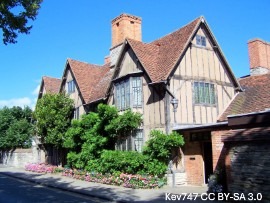
Stratford-upon-Avon home of Shakespeare's daughter is 'At Risk'
Lady Grange’s House repaired on St Kilda
.jpg)
National Trust for Scotland repairs stone cleit with link to famous island resident
Griff Rhys Jones on BBC Radio 4 Today programme
,_Green_Lane,_Derby.jpg)
The Victorian Society’s President unveiled its latest Top Ten Endangered Buildings 2026.
Need a MATE? Book your place now.

IHBC offers free webinars on applying for IHBC accreditation (Full & Associate).
UK Stained Glass Repository finds windows new homes
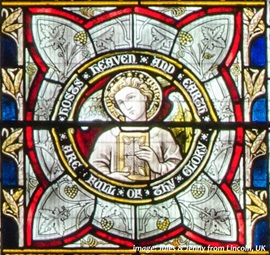
How are stained glass windows are rescued, stored and repurposed?
APPGEBE report sets high aims for quality
'Government must not sacrifice quality in drive to build 1.5m homes'
New measures protect Historic Shipwrecks from heritage crime

Underwater cultural heritage benefits from new HE guidance
How could the City of London skyline look in 6 years' time?

Visualisation shows approved planning applications as completed buildings
National Trust for Scotland calls for VAT cuts
Heritage neglect is encouraged by current policies
IHBC's 'Context' Issue 186 features Industrial Heritage
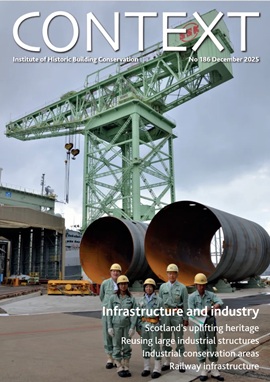
IHBC's members' journal reports on the challenges of conserving infrastructure
Book now for IHBC Annual School 2026

IHBC Annual School is taking place 18-20 June 2026 in Newcastle
RICHeS Research Infrastructure offers ‘Full Access Fund Call’
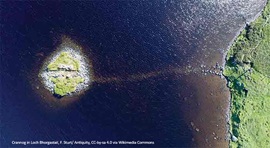
RICHeS offers a ‘Help’ webinar on 11 March
Latest IHBC Issue of Context features Roofing
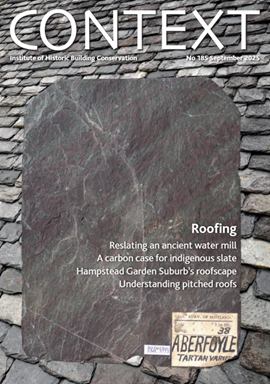
Articles range from slate to pitched roofs, and carbon impact to solar generation to roofscapes
Three reasons not to demolish Edinburgh’s Argyle House

Should 'Edinburgh's ugliest building' be saved?
IHBC’s 2025 Parliamentary Briefing...from Crafts in Crisis to Rubbish Retrofit
IHBC launches research-led ‘5 Commitments to Help Heritage Skills in Conservation’
How RDSAP 10.2 impacts EPC assessments in traditional buildings

Energy performance certificates (EPCs) tell us how energy efficient our buildings are, but the way these certificates are generated has changed.
Comments
[edit] To make a comment about this article, click 'Add a comment' above. Separate your comments from any existing comments by inserting a horizontal line.